
Sara B. Brown, née Brujordet, 1864-1928


Headstone GPS Coordinates: burial location in the cemetery unknown

Birth: 1864, Bismo, Oppland, Norway

Death: 13 February 1928, Bremerton, Kitsap County, Washington

Relatives in Seabeck Cemetery: Madeline Josephine Brown


Sigrid Olsdotter Brujordet was born in 1864 in Bismo, Oppland, Norway, the eldest of five children born to Ole Olsen Gubhagen Brujordet (1836–1881) and Magnhild Toresdatter Gjeilo, also known as Gjellaug (1840–about 1898). She was baptized on October 16, 1864 in the parish of Skjåk, Oppland. As a child, she was recorded with her parents and younger siblings in the 1875 census, growing up in a rural Norwegian community shaped by family ties, farm life, and the rhythms of the church.

In the summer of 1886, at just twenty-one years old, Sigrid left Norway for America. Traveling westward through Minnesota, she passed through areas where some of her relatives may have settled; an uncle lived there, and years later her sister would visit him. Eventually, Sigrid became known as Sarah B. Brown, the name she would use for the remainder of her life.

In November 1892, Sarah married Henry M. Brown, possibly in Oregon, though no marriage record has yet been located. Henry was a ship’s carpenter from Maine and was twelve years her senior. Their married life eventually brought them to Seattle, King County, Washington, where the births of their children were officially recorded. Their first son, Charles, was born on April 1, 1897, followed by William M. Brown on July 11, 1899. During this period, Sarah’s sister Thora—often spelled “Toro” in contemporary records—boarded with the family. Thora later returned to Minnesota, and when she traveled west again to visit Sarah in Seattle, her local Minnesota newspaper noted that she would be making the journey on the Northern Pacific Railroad.

By 1900, Sarah and Henry were living on 10th Avenue South in Seattle with their two young sons. They had been married for eight years, and Sarah reported that she had already lost one child, likely between the births of Charles and William. The home, however, was not a happy one. On January 30, 1901, the Seattle Post-Intelligencer reported that articles of separation between Henry M. Brown and Sarah B. Brown had been filed with the county auditor. The document, described as the first of its kind recorded in King County, recited their marriage in November 1892, noted that there were two children, and stated that many differences had arisen between them. By mutual agreement, they resolved to live separate and apart for the rest of their natural lives.

At the time of the separation, it was unclear whether Sarah knew she was pregnant, as the papers made no mention of it. Nevertheless, on September 3, 1901, the birth of Maggie Brown was recorded. The record identified the parents as Sarah “Burjority,” a 37-year-old woman from Norway, and Henry Miller Brown, a 48-year-old carpenter from Maine.

Shortly after the separation, Henry filed for divorce and then disappeared from Seattle, likely returning to life at sea. He resurfaced in the 1910 census near New Orleans, Louisiana, where he was working as a ship’s carpenter. By 1930, he was again located in the census, this time living in East Palatka, Putnam County, Florida, employed as a laborer on a potato farm. Henry died there in 1932 and was buried in the Putnam County Poor Farm Cemetery. There is no evidence that he had any contact with his children in Washington during those years.

In 1907, Sarah left Seattle for a quieter life in Seabeck to raise her three children. 

By 1910, Sarah was enumerated in the census as a “widowed” mother of five children, only three of whom were still living. It was not uncommon at the time for women who had been abandoned by their husbands to describe themselves as widowed, even when their spouse or former spouse was still alive. Living with her were Charles R., age 13; William K., age 10; and Madeline J., age 8. To support her family, Sarah worked as a cook in a hotel.

Tragedy struck again in 1911, when a house fire claimed the life of her daughter. On Madeline’s death certificate, she was listed as “Josephine,” likely her middle name. Family lore holds that she ran back into the burning house to retrieve her doll. Her remains were presumably interred in Seabeck Cemetery, although the death certificate does not specify a burial location. A descendant later recalled that the house was rebuilt on the same property, only to burn down again years afterward.

By 1920, Sarah was living alone in her home in Seabeck, though her son Charles lived nearby. The census noted that she owned her property outright, free of mortgage, and that she was a naturalized citizen.

Sarah B. Brown died on February 13, 1928, at the home of her son Charles in Bremerton, likely as the result of a stroke. She had been bedridden for two years by that time. She was buried two days later in Seabeck, marked only by a temporary marker in the upper eastern side of the cemetery with Madeline, according to her family. Over the following decades, knowledge of Sarah had faded from local memory, and it was mistakenly believed that she was buried in the Brown family plot with William and Larry Brown. In fact, neither she nor her husband had any relationship to William or Larry Brown.
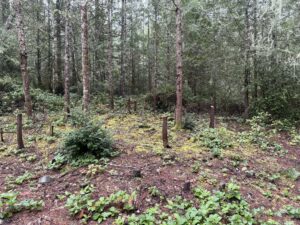
 

Madeline Josephine Brown, 1901-1911 


Headstone GPS Coordinates: Location in the cemetery is unknown

Birth: 03 September 1901, Seattle, King County, Washington.

Death: 12 May 1911, Seabeck, Kitsap County, Washington

Relatives in Seabeck Cemetery: Sarah Brown

American Revolutionary War Patriots*: Possibly on her father’s lines. 


Madeline J. Brown, was born on September 3, 1901, in Seattle, King County, Washington. She was the youngest child of Sarah B. Brown, a Norwegian immigrant, and Henry M. Brown, a ship’s carpenter originally from Maine. Her birth came during a period of upheaval in her parents’ marriage: only months earlier, in January 1901, formal articles of separation had been filed between her parents, marking the end of their life together. Whether her mother was aware of the pregnancy at the time of the separation is unknown, but Josephine entered the world amid uncertainty and change.

Josephine’s mother, born Sigrid Olsdotter Brujordet in 1864 in Bismo, Oppland, Norway, had emigrated to the United States in 1886. By the time Josephine was born, she was living in Seattle under the name Sarah B. Brown. Josephine’s father, Henry M. Brown, was twelve years older than Sarah and had worked much of his life at sea. Shortly after Josephine’s birth, Henry disappeared from Seattle, and there is no evidence that he ever had contact with Josephine or her older brothers thereafter.

In 1907, when Josephine was about six years old, her mother left Seattle and relocated the family to Seabeck, Washington, seeking a quieter place to raise her children. By the 1910 census, Josephine was living there with her mother and two older brothers, Charles R., age thirteen, and William K., age ten. Her mother described herself as widowed—a common designation at the time for women who had been abandoned—and supported the family by working as a hotel cook. The census recorded that Sarah had borne five children, only three of whom were living, underscoring the fragility of family life in that era.

Josephine’s life was tragically short. On May 12th, 1911, at approximately eight years old, she died in a house fire in Seabeck. Her death certificate lists her name as “Josephine,” likely her middle name, though she had been enumerated in census records as Madeline J. Family tradition holds that she ran back into the burning house to retrieve her doll, a poignant detail that has endured through generations. While the death certificate does not specify a burial location, it is believed that her remains were interred in Seabeck Cemetery. A later descendant recalled that the house was rebuilt on the same property, only to burn down again years afterward.


Helena “Lena” (nee’ Whitney) Johnston Branham 1888-1932


Headstone GPS Coordinates: location unknown

Birth: 16 June 1888, Illinois

Death: April 29, 1932, Seabeck, Kitsap County, Washington

Relatives in Seabeck Cemetery: William Johnston, Norma Lovell Johnston,

Infant boy Johnston, Wayne Johnston

American Revolutionary War Patriots*: Unknown. 


Helena “Lena” Whitney was born on June 16, 1888, in Illinois, the daughter of Jim Whitney of Ohio and Emma Thomas of Arkansas. Like many women of her generation, Lena’s life was marked by frequent moves, hard work, family responsibility, and personal loss, much of it unfolding across Missouri, Oklahoma, Idaho, Oregon, and Washington.

In 1907, at the age of nineteen, Lena married William Franklin Johnston in Missouri. William, a Missouri native born in 1867, was twenty years her senior. Their early married life followed William’s farm and labor work, and Lena began raising a growing family while moving frequently with him for work opportunities.

Lena became the mother of four children with William. Their first son, William Norman Johnston, was born in Carter County, Missouri, in 1907. A year later, James Loyal Johnston was born in Hunter, Grandon County, Missouri. In 1910, while the family was again in Carter County, Lena gave birth to a daughter, Hazel Helena Johnston. By 1913, the family had relocated to Kiefer, Creek County, Oklahoma, where Lena’s youngest child, Ruth Elizabeth Johnston, was born. During these years, the family rented farms and lived wherever William could find work, while Lena managed the household and raised the children.

By 1920, Lena was living in Mounds, Creek County, Oklahoma, where William worked as a laborer in the oil industry. This period coincided with Prohibition, during which William operated an illegal gin distillery. Family stories later recalled the secrecy surrounding the operation, including William’s habit of calling the car’s glove compartment the “gin box.”

Sometime between 1920 and 1925, Lena and William divorced. On August 27, 1925, Lena remarried in Sanders, Benewah County, Idaho, to Ray Branham. She married under the name Helen Parker, suggesting that she may have had an additional marriage between her divorce from William and her marriage to Ray, although no documentation of a Parker marriage has yet been found.

By 1930, Lena was living in Yankton, Columbia County, Oregon, listed in census records as a boarder in William Johnston’s household. She was recorded as divorced and working as a cook in the restaurant industry, reflecting her independence and continued labor to support herself. Two of her children, William Norman and Ruth, were also living in the household. During this time, Lena’s son Norman worked as a bucker in a logging camp alongside his father. A young married woman, Amber Kelso Hanby, was also lodging in the home; she would marry Norman the following year. Lena later signed as a witness at Norman and Amber’s marriage in February 1931 in King County, Washington.

The early 1930s brought repeated tragedy to Lena’s family. Her granddaughter, Norma Lovell Johnston, born April 18, 1931, died on December 6, 1932, from tubercular meningitis before reaching her second birthday. Another grandson, an infant son of her son James and his wife Gertrude Sage, was born on April 2, 1931, and died a week later from a seizure disorder. Both children were buried in Seabeck Cemetery. A few years later, Lena’s grandson Wayne Johnston, born in 1935 to Norman and Amber, died at less than three months old from excessive bone growth and was also buried in Seabeck.

According to family accounts, Lena moved to Camp Union, likely with her son Norman and daughter-in-law Amber, where she worked as a cook. Her daughter Hazel and Hazel’s husband, Kenneth Whitaker, were living nearby in Seabeck, Washington, placing Lena close to her surviving children and grandchildren during her final years.

On April 29, 1932, Helena “Lena” Whitney died at the age of forty-three from carcinoma of the uterus (endometrial cancer) with terminal pneumonia. She was buried in Seabeck Cemetery. Her daughter Hazel served as the informant on her death certificate and reported that Lena was still married to Ray Branham at the time of her death. No further records concerning Ray Branham have been located.

Neither Lena nor several members of her family are known to have marked graves in Seabeck Cemetery, and their exact burial locations remain unknown.


Marjorie Bradley (maiden name unknown) -1880


Headstone GPS Coordinates: location unknown

Birth: Date unknown, Ireland

Death: 22 Jan 1880, Seabeck, Kitsap County, Washington

Relatives in Seabeck Cemetery: None known.

American Revolutionary War Patriots*: None


Beyond Hauptley’s entry and her cedar marker, Marjorie Bradley doesn’t show up in any other records in Washington. However, in the June 1880 Seabeck census there was a Dennis Bradley (spelled Bratley) who was listed as a 33 year old widower born in Ireland who worked in the saw mill. There were also two children named Elizabeth Bradley (born 1875 in Nova Scotia) and Johnnie Bradley (born 1878 in the Washington Territory) who were listed as boarders living in Thomas Degnell’s household. There were no other Bradley residents living in Seabeck at this time, so there’s a good chance Dennis and Marjorie were husband and wife, and Elizabeth and Johnnie were their children.

Marjorie was buried with a simple wooden cross as a marker that read:  “Sacred to the memory of Marjorie Bradley Native of Ireland Died January 22, 1880 Amen” A photo of her marker was taken by Adele Ferguson in the 1950s and published in the local newspaper.


Samuel Bowker 1868-1883


Headstone GPS Coordinates: location unknown

Birth: 1868, Maine

Death: 08 June 1883, Seabeck, Kitsap County, Washington, USA

Relatives in Seabeck Cemetery: Frances Fayette (Cilley) Bowker.

American Revolutionary War Patriots*: Ichabod Bonney, Jr. of Massachusetts (A012028), and William Cilley of Massachusetts (A021979). Major Levi B. Bowker of Massachusetts (A012833).

Disclaimer: These lines have not been officially proven by NSDAR standards.


Samuel Bowker was born in 1868 in Maine to Simeon Crocker Bowker and Frances Fayette (Cilley) Bowker. He was one of six children in the Bowker family and grew up during a period of transition, as his family moved from coastal Maine to the lumber camps of Washington Territory.

Samuel’s parents married in Machias, Maine, in 1853. His father, Simeon, worked in the lumber industry, a demanding and often dangerous occupation, while also owning land valued at $1,200 and personal property valued at $100. Samuel’s early childhood was spent in Maine, where five of the Bowker children were born. His youngest brother, Frank, was later born in Seabeck, Washington, indicating the family’s westward relocation during Samuel’s youth.

By 1870, Simeon Bowker appeared twice in the U.S. Federal Census—once with his family in Machias, Maine, and again in Union, Mason County, Washington—reflecting the divided nature of the family during this period. By 1872, Simeon was employed by the Washington Mill Company in Seabeck as a bull puncher, driving oxen and hauling logs to tidewater via skid road. Company store records from the early 1870s show purchases of household goods, suggesting that Samuel and his siblings either had arrived in Seabeck or were preparing to join their father there.

These same records also reveal the physical toll of mill work. Simeon frequently purchased painkillers and liniment, offering insight into the harsh labor environment Samuel would soon experience firsthand.

In the 1880 U.S. census, twelve-year-old Samuel was living in Seabeck in the household of his sister Martha (Mattie) and her husband, Ensley Doncaster, along with his parents and brothers. Just one year later, on October 15, 1881, Samuel’s mother Frances died at the age of forty-eight. Jacob Hauptly, the Seabeck Cemetery caretaker, recorded in his diary that there was “a large turnout” at her burial—a significant event in Samuel’s young life.

Despite his youth, Samuel soon joined the workforce. In the 1883 Washington Territorial Census, his life appears in two conflicting entries. One lists him incorrectly as seven years old in his father’s household, while another, six pages earlier, records “Sam’l Bowker,” age fourteen, born in Maine, working as a “mill man” at the Port of Seabeck. This latter entry more accurately reflects Samuel’s circumstances, as he was already employed in the lumber industry as a teenager.

Tragically, Samuel’s working life was brief. On June 8, 1883, at just fifteen years old, he was killed in a mill accident. Jacob Hauptly noted that Samuel was buried two days later. According to historian Fred Just’s records, Samuel’s grave was marked with a cedar slab—now lost—similar to others once common in Seabeck Cemetery.

Later accounts misidentified the victim of the mill accident as Samuel’s father, Simeon, but census records confirm that Simeon was still alive and living in Seabeck in 1887. Samuel’s younger brother Frank, then eight years old, was living with the Doncaster family, who had a young child of their own.

The exact location of Samuel Bowker’s grave within Seabeck Cemetery is now unknown, as is the burial place of his mother. What remains of Samuel’s story is pieced together through census records, mill ledgers, and cemetery notes—documents that reveal the realities of child labor, family loss, and the dangers of industrial work in Washington Territory.


 Frances Fayette (nee Cilley) Bowker, 1833-1881 


Headstone GPS Coordinates: location unknown

Birth: 28 Aug 1833, Machias, Washington County, Maine, USA

Death: 15 Oct 1881, Seabeck, Kitsap County, Washington, USA

Relatives in Seabeck Cemetery: Samuel Bowker

American Revolutionary War Patriots*: Ichabod Bonney, Jr. of Massachusetts (A012028), and William Cilley of Massachusetts (A021979). 

Disclaimer: These lines have not been officially proven by NSDAR standards.


Frances Fayette (Cilley) Bowker was born on August 28, 1833, in Machias, Washington County, Maine, to Joseph Bonney Cilley and Mary Stickney. She was the youngest of their seven children. Her father, Joseph, supported the family by working as a shoemaker.

On December 7, 1853, Frances married Simeon Crocker Bowker in Machias. Together they had six children: Mary Lizzie (1855), Nellie M. (1858), Martha Grace (1862), Joseph S. (1866), Samuel (1868), and Frank (1878). Their first five children were born in Maine, while their youngest, Frank, was born in Seabeck, Washington. Their eldest daughter, Mary Lizzie, born on April 8, 1855, died on January 31, 1857, just shy of her second birthday.

Simeon supported his family through work in the lumber industry. In addition, he owned land valued at $1,200 and personal property valued at $100. In the 1870 census, Simeon and his family were enumerated in Machias, Maine. That same year, Simeon appeared a second time in the U.S. Federal Census, listed as living in Union, Mason County, Washington, where he was employed as a head lumberman. By 1872, he was working for the Washington Mill Company as a bull puncher, driving oxen and hauling logs to tidewater via skid road.

Company ledgers record Simeon’s purchases from the mill store, which included a pair of shoes, butter, a bottle of “pain killers,” and two bottles of “spices.” In 1873, additional purchases were noted, including cheese, coffee, herring, silk, silesia (a fabric sometimes used as window coverings or clothing linings), a box of soap, lard, and clothespins. These household items suggest that Frances and the children had either arrived in Seabeck or were expected to arrive around that time. Simeon’s repeated purchases of painkillers and liniment provide insight into the physically demanding nature of his work.

As 1873 progressed, Simeon occasionally spent more than his account balance, with notations indicating that he later paid off outstanding amounts; shoes were one such example. Research conducted by a University of Washington graduate student in a 1966 thesis revealed that “S. Bowker” had spent nearly $500 more than he had earned.

On January 9, 1875, Frances and Simeon’s daughter Nellie married William Chillman. On October 14, 1878, their daughter Martha (“Mattie”) married Ensley Doncaster in Port Madison. The marriage record notes that an affidavit was required to obtain parental permission, as Mattie was only sixteen years old. That same year, Frances and Simeon welcomed their youngest child, Frank, who was born in Seabeck.

In the 1880 U.S. census, Simeon and Frances, along with their three sons—Joseph, age 14; Samuel, age 10; and Frank, age 2—were living in the household of their daughter Martha and her husband, Ensley Doncaster.

Frances Bowker died on October 15, 1881, from unknown causes, at the age of forty-eight. Jacob Hauptly, who managed the Seabeck Cemetery at the time, noted in his diary that there was “a large turnout” at her burial.

A Washington Territorial Census was conducted in 1883, though it contains several inconsistencies. It appears that the census taker—likely county assessor Joseph Comstock—may have relied on earlier records, possibly from the 1880 census, when compiling the document. One family entry lists the household of Simeon Bowker as follows:

  • Simeon Bowker, age 59
  • Frances Bowker, age 49 (despite records indicating her death in 1881)
  • Joseph Bowker, age 16
  • Samuel Bowker, age 7 (though he should have been approximately 14–15)
  • Frank Bowker, age 5

Six pages earlier in the same census, “Sam’l Bowker,” age 14, born in Maine and listed as a “mill man,” appears among other workers at “P. Seabeck” (Port of Seabeck).

On June 8, 1883, fifteen-year-old Samuel Bowker died in a mill accident. Jacob Hauptly recorded that he was buried two days later. According to notes by historian Fred Just, Samuel was marked with a cedar grave marker that has since disappeared from the cemetery.

In her book Tide’s Out, Table’s Set, Fredi Perry stated that Simeon Bowker was the individual killed in the mill accident; however, this is inaccurate. Simeon was enumerated in the 1887 Washington Territorial Census as living in Seabeck. By that time, his son Frank, then eight years old, was living with the Doncasters, who also had a two-year-old son of their own.

It remains unknown whether Simeon Bowker was buried in Seabeck alongside his wife and son. No death record has been located for him. He last appears in the 1900 census, living in Port Hadlock near his son Frank. The burial locations of Frances and Samuel Bowker within Seabeck Cemetery are also currently unknown.

The Elizabeth Ellington Chapter wishes to acknowledge the Revolutionary War ancestors of Frances (Cilley) Bowker and Samuel Bowker: Ichabod Bonney, Jr. of Massachusetts (A012028), and William Cilley of Massachusetts (A021979). Samuel is also related to Major Levi B. Bowker of Massachusetts (A012833).


William Bell, Abt 1831-1869


Headstone GPS Coordinates: 

Birth: Abt. 1831, location unknown

Death: 17 Jan 1869, Seabeck, Kitsap County, Washington

Relatives in Seabeck Cemetery: None known.

American Revolutionary War Patriots: None known. 


While researching the earliest newspapers from the period when Washington was still a territory, the SCRP team uncovered several articles describing the circumstances surrounding the deaths of William Bell and a man known only by the surname Hamilton. According to these accounts, the two men had been indulging in strong drink before setting out in a canoe to cross Hood Canal to Walker’s timber camp. They never arrived.

A letter published in The Echo and dated February 5, 1869, recounts the incident:

“Seabeck, Jan. 26th, 1868.
It is with painful feelings I record the following: On the evening of the 17th inst., Wm. Bell and —-Hamilton were drowned. The particulars, as near as I can learn, are that about dusk on the day above mentioned, they left this place for Walker’s camp, on the opposite side of the Canal, and it is supposed that when within hearing distance of camp their canoe upset, separating them, as voices were heard at camp in different directions; but as the hallooing soon ceased, and those in the camp thinking it was Indians, no assistance was rendered, and thus they met their untimely death.”

Nine days later, William Bell’s body washed ashore nearly twenty miles away. It was recovered and returned to Seabeck, where he was buried and marked with an inscribed cedar slab.

William Bell’s grave marker is one of only two original cedar markers still known to exist from Seabeck Cemetery. Its inscription reads:

Sacred to the memory of William Bell,
Aged about 38 years,
Drowned, Jan 17, 1869.

To date, the team has been unable to locate additional records detailing William Bell’s life. There is no indication that he had family in Seabeck, suggesting he was likely one of the many hardworking bachelors in the area whose life ended prematurely due to a combination of liquor and poor judgment.

While little is known about William Bell himself, the story of his wooden marker is well documented. The marker remained in the cemetery until July 24, 1971, when it was reported stolen in the Kitsap Sun. Shortly thereafter, an anonymous caller contacted the Kitsap County Sheriff to report seeing the marker “near the old county road shed on Mitchell Road” in Port Orchard. Deputies recovered the marker and returned it to Seabeck.

On August 21, 1977, cemetery caretaker and historian Fred Just donated the cedar marker to the Kitsap History Museum, where it has since been protected from both theft and the elements.

Hamilton’s body was never recovered. Records from the Washington Mill Company for the years 1860–1870 list an employee named J. Hamilton earning $35 per month. Whether this individual was the same man who drowned alongside William Bell—and who may still rest at the bottom of Hood Canal—remains uncertain.


Samuel J. Basset, 1850-1940    


Headstone GPS Coordinates: 

Birth: 4 April 1850,   Llanelly, Carmarthenshire, Wales   

Death: 23 June 1940, Sedro-Woolley, Skagit County, Washington

Relatives in Seabeck Cemetery: Anna (Evans) Bassett, John Evans

American Revolutionary War Patriots: None


Samuel J. Bassett was born on April 4, 1850, in Llanelly, Carmarthenshire, Wales, United Kingdom, to Samuel Bassett and Elizabeth Hopkins. He was the eldest of six children.

Many families in Llanelly worked in the region’s rich coal mines, and, like his father, Samuel became a coal miner. Around 1871, when he was twenty-one years old, Samuel moved with his parents and siblings to Clydach, Ystradyfodwg, Glamorgan, Wales, where he may have met his future wife, Anna.

Anna J. Evans was born on December 16, 1849, in Llanfyllin, Montgomeryshire, Wales. Her father, John Evans, was a laborer, and her mother was Mary Vaughn.

Samuel and Anna were married in 1874.

In 1877, the couple departed Liverpool, England, aboard the steamer City of Richmond, arriving in New York City on October 1. In the 1880 census, they were living in Palmyra, Portage County, Ohio, where Samuel worked as a coal miner and Anna as a housekeeper. Anna’s father, John Evans, was living next door with her uncle, Wakin Vaughn; both men were employed as coal miners.

Sometime around 1891, the Bassetts moved to Crosby in Kitsap County, Washington. They eventually purchased 160 acres of land just northeast of the Crosby School. In time, Anna’s father, John Evans, came to live with them.

While primarily working his farm, Samuel also became a Baptist minister. He conducted church services in the Crosby Schoolhouse on Sundays and wrote several obituaries for deceased community members that were published in the Kitsap County Herald under the pen name “Brutus.” He was also a member of the Crosby Community Club. In 1895, he was elected Justice of the Peace in Seabeck and served in this role for one year.

By 1910, Samuel was listed as working as a carpenter. On April 10, 1918, his wife Anna died in Seattle, likely while seeking treatment for the lobar pneumonia that claimed her life. She was sixty-seven years old. Her body was brought back across the Sound for burial at Seabeck Cemetery.

The late historian Fred Just recorded the following story in his book Seabeck and the Surrounding Area:

“After his wife died, he [Samuel] tried to ‘spark’ Nancy M. Just. Sam always carried a cane and chewed tobacco which drooled down his chin. She had no interest in him although she was kind to him. One night when visiting her he stayed till after dark, so she asked her grandson Melvin E. Just to walk Mr. Bassett home. Melvin did not like Mr. Bassett. Shortly after leaving, Melvin came back home. When questioned why he was back so quick, he said that Mr. Bassett told him that he could make it on his own so Melvin could go back home. At that time, Mrs. Just’s son Lester had taken out some large stumps so that the garden could be extended. One hole in particular was rather deep and muddy. It was found out later that Melvin had led Mr. Bassett into the hole and left him there to make his own way home. There is no record of Melvin’s punishment.”

Samuel continued to live alone on his farm in Crosby until tragedy struck twice when two of his homes burned down in 1927 and 1928. These incidents were recorded in the Kitsap County Herald (it is worth noting that Samuel himself was known in the paper by the pen name “Brutus”).

Kitsap County Herald, Friday, April 1, 1927:
The Home of Brutus Burns to the Ground

“The house, barn and some other buildings belonging to Rev. S. J. Basset of Crosby burned to the ground Wednesday noon. Mr. Bassett had gone a little ways from home and was doing some work on his place, when he looked up and saw the roof of his house ablaze. He rushed home and made every effort to put out the fire, but it was too far gone. He was alone and had no one to help him. In the excitement, he rescued only a few minor things. About everything he had except the clothes he wore was burned up. He saved a few bedclothes and his radio, easiest to get out, but all the rest went up in smoke. He had $50 in paper money put away, and that burned up with the rest. He had many valuable things, some of which he could not put a price on, as they were much thought of. Mr. Bassett’s health has been quite poor lately, and he had no insurance, so everything is a complete loss. It is a pitiful case. His large number of friends may make some arrangement to help him out, as the people around Crosby have shown a fine spirit before.”

Kitsap County Herald, Friday, July 13, 1928, Seabeck:

“Rev. Bassett lost his little house again by fire a few weeks ago. He lost practically everything he had, among which was a gold watch and other precious heirlooms. The neighbors have helped him to build another small house. The Hite brothers donated part of the lumber.”

Samuel was in his late seventies when these fires occurred. In 1930, he was living as a boarder with the Barricean (Barrieau) family in Crosby. He sold forty acres of his property to Jack Barrieau and his family while continuing to live with them.

In 1933, fire struck once again.

Kitsap County Herald, October 27, 1933, Crosby:

“Mr. S. J. Bassett burned out his last small shack about a couple weeks ago. In the fire he lost his good overcoat and most all of his clothes. This is the third time Mr. Bassett has lost his place of abode by fire in the last five years. One has to be very careful about fire, and when a man gets old, he sure needs someone to watch and care for him, and even then, one can’t always do it. This time Mr. Bassett almost lost his life. It is a constant worry to the folks who care for him. He has caught his clothes on fire so many times with his pipe. We hope in the future that he will be more careful.”

In 1934, Samuel moved to Sunnyvale Home in Port Orchard. By 1935, he was living in Snohomish County. In the 1940 census, taken on April 16, Samuel was listed as a patient at Northern State Hospital. He died a few months later, on June 23, 1940, at the age of ninety.

Samuel’s body was returned to Seabeck Cemetery, where he was buried beside his wife. Neither Samuel’s nor Anna’s grave has a headstone today, but both burial sites are marked on Fred Just’s plot map.

According to available records, Samuel and Anna never had any children. Samuel’s only known relative living in the area was his nephew, John Emlyn Bassett, who resided in Bremerton.


Anna (nee Evans) Bassett, 1849-1918


Headstone GPS Coordinates: 

Birth: 16 Dec 1849, Llanfyllin, Montgomeryshire, Wales, United Kingdom

Death: 10 Apr 1918, Seattle, King County, Washington, USA

Relatives in Seabeck Cemetery: Samuel Bassett, John Evans

American Revolutionary War Patriots: None


Samuel J. Bassett was born on April 4, 1850, in Llanelly, Carmarthenshire, Wales, United Kingdom, to Samuel Bassett and Elizabeth Hopkins. He was the eldest of six children.

Many families in Llanelly worked in the region’s rich coal mines, and, like his father, Samuel became a coal miner. Around 1871, when he was twenty-one years old, Samuel moved with his parents and siblings to Clydach, Ystradyfodwg, Glamorgan, Wales, where he may have met his future wife, Anna.

Anna J. Evans was born on December 16, 1849, in Llanfyllin, Montgomeryshire, Wales. Her father, John Evans, was a laborer, and her mother was Mary Vaughn.

Samuel and Anna were married in 1874.

In 1877, the couple departed Liverpool, England, aboard the steamer City of Richmond, arriving in New York City on October 1. In the 1880 census, they were living in Palmyra, Portage County, Ohio, where Samuel worked as a coal miner and Anna as a housekeeper. Anna’s father, John Evans, was living next door with her uncle, Wakin Vaughn; both men were employed as coal miners.

Sometime around 1891, the Bassetts moved to Crosby in Kitsap County, Washington. They eventually purchased 160 acres of land just northeast of the Crosby School. In time, Anna’s father, John Evans, came to live with them.

While primarily working his farm, Samuel also became a Baptist minister. He conducted church services in the Crosby Schoolhouse on Sundays and wrote several obituaries for deceased community members that were published in the Kitsap County Herald under the pen name “Brutus.” He was also a member of the Crosby Community Club. In 1895, he was elected Justice of the Peace in Seabeck and served in this role for one year.

By 1910, Samuel was listed as working as a carpenter. On April 10, 1918, his wife Anna died in Seattle, likely while seeking treatment for the lobar pneumonia that claimed her life. She was sixty-seven years old. Her body was brought back across the Sound for burial at Seabeck Cemetery.

The late historian Fred Just recorded the following story in his book Seabeck and the Surrounding Area:

“After his wife died, he [Samuel] tried to ‘spark’ Nancy M. Just. Sam always carried a cane and chewed tobacco which drooled down his chin. She had no interest in him although she was kind to him. One night when visiting her he stayed till after dark, so she asked her grandson Melvin E. Just to walk Mr. Bassett home. Melvin did not like Mr. Bassett. Shortly after leaving, Melvin came back home. When questioned why he was back so quick, he said that Mr. Bassett told him that he could make it on his own so Melvin could go back home. At that time, Mrs. Just’s son Lester had taken out some large stumps so that the garden could be extended. One hole in particular was rather deep and muddy. It was found out later that Melvin had led Mr. Bassett into the hole and left him there to make his own way home. There is no record of Melvin’s punishment.”

Samuel continued to live alone on his farm in Crosby until tragedy struck twice when two of his homes burned down in 1927 and 1928. These incidents were recorded in the Kitsap County Herald (it is worth noting that Samuel himself was known in the paper by the pen name “Brutus”).

Kitsap County Herald, Friday, April 1, 1927:
The Home of Brutus Burns to the Ground

“The house, barn and some other buildings belonging to Rev. S. J. Basset of Crosby burned to the ground Wednesday noon. Mr. Bassett had gone a little ways from home and was doing some work on his place, when he looked up and saw the roof of his house ablaze. He rushed home and made every effort to put out the fire, but it was too far gone. He was alone and had no one to help him. In the excitement, he rescued only a few minor things. About everything he had except the clothes he wore was burned up. He saved a few bedclothes and his radio, easiest to get out, but all the rest went up in smoke. He had $50 in paper money put away, and that burned up with the rest. He had many valuable things, some of which he could not put a price on, as they were much thought of. Mr. Bassett’s health has been quite poor lately, and he had no insurance, so everything is a complete loss. It is a pitiful case. His large number of friends may make some arrangement to help him out, as the people around Crosby have shown a fine spirit before.”

Kitsap County Herald, Friday, July 13, 1928, Seabeck:

“Rev. Bassett lost his little house again by fire a few weeks ago. He lost practically everything he had, among which was a gold watch and other precious heirlooms. The neighbors have helped him to build another small house. The Hite brothers donated part of the lumber.”

Samuel was in his late seventies when these fires occurred. In 1930, he was living as a boarder with the Barricean (Barrieau) family in Crosby. He sold forty acres of his property to Jack Barrieau and his family while continuing to live with them.

In 1933, fire struck once again.

Kitsap County Herald, October 27, 1933, Crosby:

“Mr. S. J. Bassett burned out his last small shack about a couple weeks ago. In the fire he lost his good overcoat and most all of his clothes. This is the third time Mr. Bassett has lost his place of abode by fire in the last five years. One has to be very careful about fire, and when a man gets old, he sure needs someone to watch and care for him, and even then, one can’t always do it. This time Mr. Bassett almost lost his life. It is a constant worry to the folks who care for him. He has caught his clothes on fire so many times with his pipe. We hope in the future that he will be more careful.”

In 1934, Samuel moved to Sunnyvale Home in Port Orchard. By 1935, he was living in Snohomish County. In the 1940 census, taken on April 16, Samuel was listed as a patient at Northern State Hospital. He died a few months later, on June 23, 1940, at the age of ninety.

Samuel’s body was returned to Seabeck Cemetery, where he was buried beside his wife. Neither Samuel’s nor Anna’s grave has a headstone today, but both burial sites are marked on Fred Just’s plot map.

According to available records, Samuel and Anna never had any children. Samuel’s only known relative living in the area was his nephew, John Emlyn Bassett, who resided in Bremerton.


Nicholas S. Baker, unknown dates


Headstone GPS Coordinates: 

Birth: date unknown, before 1900. Seabeck, Kitsap County, Washington 

Death: Date unknown. Before 1900. Seabeck, Kitsap County, Washington 

Relatives in Seabeck Cemetery: Jasper Baker, Millie Baker

American Revolutionary War Patriots*: Moses Baker (Massachusetts) A005039, Aaron Hanscom (Massachusetts) A051231, Daniel Hoyt (Massachusetts) A058984.

Disclaimer: These lines have not been officially proven by NSDAR standards.


Nicholas Baker was the son of Jasper Baker and Isabelle Baker (née Little). The dates of his birth and death are unknown, though both occurred prior to 1900. Local historian Fred Just recorded that Seabeck resident Ensley Doncaster reported a Nicholas S. Baker buried in Seabeck Cemetery; however, no dates or parental information were documented.