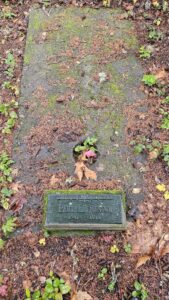
Frances Elizabeth Rogers née Jones, 1892-1943

Headstone GPS Coordinates: Burial location unknown. 

Birth: 12 January 1892, Afton, Union County, Iowa

Death: 16 May 1943, Steilacoom, Pierce County, Washington

Relatives in Seabeck Cemetery: Albert Rogers

American Revolutionary War Patriots*: Joseph La Follette (New Jersey)

Disclaimer: These lines have not been officially proven by NSDAR standards.


Frances Elizabeth Rogers née Jones, was born on January 12, 1892, in Afton, Union County, Iowa, the youngest of nine children born to Henry T. and Pary (LaFollett) Jones. Her parents had married in Wapello County, Iowa, before settling in Union County, where her father farmed his own land. Tragedy struck early in Frances’ life when her mother died shortly after her birth, leaving her to grow up largely under the care of her father and older siblings.

By 1910, Frances, her father, and one of her brothers had relocated to Fairview in Douglas County, Washington. While the exact reason for the move is unknown, it is likely influenced by family ties—her eldest sister had already settled there, and three older brothers were living nearby in Entiat, Chelan County. The move connected Frances more closely with her extended family during her young adulthood.

Around this time, she met Dr. Albert “Almanza” Rogers, a physician practicing in Okanogan County, Washington. Born January 25, 1867, in Shelby, Ohio, Albert was the only child of Andrew Jackson and Katherine (Hammen) Rogers. After graduating from Shelby High School in 1886, he earned his Doctor of Medicine degree in 1896 from Starling Medical College in Columbus, Ohio. He later traveled extensively abroad and practiced medicine in Manila in the Philippines during the Spanish-American War, likely as a civilian physician. Eventually, he established medical practices in Alaska and Washington.

Despite a twenty-five-year age difference, Frances and Albert married on Thanksgiving Day, November 30, 1916, in Chelan, Washington. Her brother, Thomas I. Jones, served as one of the witnesses. In 1917, the couple welcomed their first child, Andrew “Andy” J. Rogers, while living on Lopez Island. Two more children followed: Rosemary and Almanza H. Rogers.

By 1919, Albert had retired from medicine, and the family moved to Stavis Bay in Seabeck, Washington, where he began farming. During the construction of their cabin, Frances and her young family lived with the Baer family. Life in Seabeck demanded hard work and resilience. Albert cleared land, blasted stumps with dynamite, installed more than a mile of underground drainage on their three-acre property, and helped build the Stavis Bay Road.

Frances, however, became the heart of the household and a beloved figure in the community. She carefully chronicled daily life in her diaries, preserving the rhythms and challenges of rural living. Known throughout town for her exceptional bread-making, she welcomed neighbors who came to barter for bread, eggs, or produce. Visitors were often invited inside for games of caroms or 500, making her home a place of warmth, hospitality, and fellowship.

In 1930, Frances faced profound loss when Albert died of cancer on August 4. She recorded in her diary that his funeral was well attended, with Seabeck residents bringing many flowers to honor him. After his death, Frances temporarily moved with her children to Entiat to live with family before eventually returning to their Seabeck home.

Frances continued raising her children there until her health declined. She was later admitted to Western State Hospital, suffering from what was then termed dementia praecox or cognitive disintegration. After several weeks, she passed away on May 16, 1943, from dilation of the heart and congestion of the lungs.

Her eldest son, Andrew “Andy,” helped dig her grave in Seabeck Cemetery, laying her to rest beside her husband. In keeping with his deeply private nature, he chose not to mark their graves, believing it was no one’s business to know precisely where his parents were buried.


Albert “Almanza” Rogers, 1867-1930

Headstone GPS Coordinates: Burial location unknown. 

Birth: 25 January 1867, Shelby, Richland County, Ohio 

Death: 04 August 1930, Seabeck, Kitsap County, Washington

Relatives in Seabeck Cemetery: Frances Elizabeth Rogers née Jones 

American Revolutionary War Patriots*: None

Disclaimer: These lines have not been officially proven by NSDAR standards.


Albert “Almanza” Rogers was born on January 25, 1867 in Shelby, Ohio.  Albert was the only

child of Andrew Jackson and Katherine Rogers née Hammen. His mother died when he

was ten years old. His father remarried and had at least three additional children.

Following graduation from Shelby High School in 1886, Albert continued his studies, and

in 1896 received the degree of Doctor of Medicine from Starling Medical College in

Columbus, Ohio. Following graduation, he traveled extensively and visited many

foreign countries. During the Spanish-American War, Albert was a practicing physician

in Manila, The Philippines.  Albert was not part of the military, so it is assumed he there

with an independent medical group, or on his own. Later he practiced medicine in Douglas,

Alaska.

By 1910, Albert was practicing medicine in Okanogan County, Washington. At some point, he met Frances Elizabeth Jones who was living in Douglas County with her father and brother. Albert’s office burned down, and he moved to Lopez Island. Two years later, even with their twenty-five year age gap, Albert and Frances were married on Thanksgiving Day (30 Nov 1916) in Chelan, Washington.  Her brother, Thomas I. Jones was one of their witnesses. 

In 1917, when their first son Andrew “Andy” J. Rogers was born, Albert and Frances lived on Lopez Island. By 1919, Albert had retired from medicine and they had moved to Seabeck where Albert started his own farm.  They had two additional children, Rosemary and Almanza H. Rogers.

Frances kept diaries and chronicled her and her family’s life in Stavis Bay in Seabeck. While their cabin was being constructed, they lived with the Baer family. Albert built more than a mile of underground drains on his three acre property to keep his land dry. He fell trees and blew up stumps with dynamite. He also helped build Stavis Bay Road.

Frances was famous in town for her bread making skills. Whenever neighbors came to barter for bread, eggs, or produce, she would invite them into the house to play games such as caroms or 500. 

Albert was known to be a friendly member of the community and a hard worker. Sadly, cancer took over his body and he died on August 4th, 1930. Frances recorded in her diary that his funeral was well attended by the Seabeck residents who brought many flowers to his grave.  After Albert died, the family left Seabeck for a couple years to go live with Frances’ family in Entiat, then they came back to their Seabeck home. Frances and her young children continued to live in Seabeck until she was admitted into Western State Hospital for dementia praecox or cognitive disintegration. She stayed in the hospital for several weeks before she passed away on May 16, 1943 from “dilation of heart, and congestion in the lungs.” Her eldest son Andrew “Andy” was one of the gravediggers in Seabeck Cemetery. He buried his mother near his father, but he never marked their graves believing it wasn’t anyone’s business to know where in the cemetery his parents were buried. 


Paul Edward Rensch, 1857-1911

Headstone GPS Coordinates: 

Birth: 12 April 1857, Spandau, Berlin, Germany

Death: 06 July 1911, Seattle, King County, Washington

Relatives in Seabeck Cemetery: Frank Rensch

American Revolutionary War Patriots*: None

Disclaimer: These lines have not been officially proven by NSDAR standards.

Paul Edward Rensch was born on April 12, 1857 in Spandau, Berlin, Germany to his parents Andreas Friedrich Eduard Rensch and Marie Elizabeth Caroline Borgman.He was baptized at St. Nikolai Lutheran Church in Spandau. Paul was the fourth child of his parents. He had three older brothers named Friedrick Andreas Eduard (1850), Eduard Demetrius Traugott (1852), and Carl Friedrick Otto (1853). He then had a younger brother born in 1859 named Eduard Franz who became known as Frank Edward Rensch. 

Unfortunately, two of Paul and Frank’s older brothers, Friedrick and Carl, both died young. Eduard grew up and had a family in Hamburg, Germany where they all stayed.

Paul first arrived in the U.S.A around 1890 in San Francisco, California. 

Between 1889 and 1895, several passenger lists out of Hamburg, Germany record Paul travelling to Central and South America on his way to San Francisco or Seattle. He worked as a cook and a merchant at different times. Around 1895, he travelled back to Europe to stay for awhile.

In July 1899 when he was forty-two years old, Paul married a twenty-eight year old German woman named Martha Hermina Kleebery in July 1899 in Grimsby, Lincolnshire County, England. Ten years later in 1909, Paul traveled back alone to Seattle. In the 1910 census, Paul was recorded as living in a boarding house off Madison Street in Seattle, and worked as a janitor. The 1910 Seattle directory listed him working as a porter. 

On July 6, 1911 at the age of fifty-four, Paul suddenly died in Seattle from “apoplexy” or a stroke. His brother Frank filled out his death certificate stating that Paul was married and worked as a bookkeeper. Paul’s wife was still in England at the time of his death working as a domestic servant. No records have been found to indicate they had any children.

Paul’s body was brought to Seabeck to be buried in the cemetery under a concrete grave slab and small bronze marker. Somehow, his marker was inscribed with his birth year being “1847,” which is ten years off from his actual birth year listed in all the paper records.  


Frank Edward Rensch,1859-1914

Headstone GPS Coordinates: 

Birth: 22 June 1859, Berlin, Germany

Death: 13 December 1914, Seattle, King County, Washington

Relatives in Seabeck Cemetery: Paul Rensch

American Revolutionary War Patriots*: None

Disclaimer: These lines have not been officially proven by NSDAR standards.

Frank Edward Rensch was born on June 22, 1859 in Berlin, Germany to his parents Andreas Friedrich Eduard Rensch and Marie Elizabeth Caroline Borgman. He was baptized on August 14, 1859 in Berlin, Brandenburg as Eduard Franz Rensch.  He was the youngest of his parents’ five known children.

When Frank was twenty years old in 1879, he arrived in New York. In 1896, he was likely in San Francisco, California when he married a German woman named Amelia Gantke whose family originally settled in Wisconsin. It’s a bit of a mystery on how Frank and Amelia met, but they were married, and had their first son Paul born in May 1896. 

In 1900, Frank was listed on the San Francisco, California census working as a Sea Captain. His wife, sons Paul (1896) and Frank E. (1898), were living in his household along with a woman named Mabel Rensch who was listed as Frank’s sister. No records can be found about this possible sister who was recorded as being born in 1849 in California. She does not show up in any family records with Frank’s parents back in Germany, so it’s unclear if Frank had a biological older sister.

In 1901, Frank, Amelia, Paul, and Frank (Jr) had moved to Port Townsend where Frank still worked as the master of the schooner named “A.J. West”. He and his wife had another son named Ernest Godfrey born that year.

Around 1908, Frank quit sailing as a captain and moved his family to Crosby where he purchased his own ranch to become a poultry farmer. The family lived next door to and became friends with Nathaniel Sargent who frequently mentioned the Rensch family members in his diaries. Frank was one of the wealthier men in Seabeck, and was the first person in town to own an automobile.

Eventually, the sea called to Frank, and he took up sailing jobs again while his family lived in Crosby. The “Port Townsend Daily Ledger” published on March 19, 1914 wrote about Frank’s visit to the city and his trip to Chile: 

“Captain F.W. Rensch of Crosby, Kitsap county, was in the city yesterday on business. The captain has many friends here, where his family made his home for a number of years while he was running out of the Sound. Captain Rensch abandoned the sea some time ago, to make his home on a Kitsap county farm. He made a couple of trips last year as a skipper of the barkentine Newsboy. He took the craft to Chile last fall, there turning over to parties who had purchased the ship. Captain Rensch returned home on a passenger steamer, thus missing all the severe weather in which so many windjammers were wrecked or disabled.” 

Later that year in 1914 after this article was published, Frank died on December 13 in Crosby when he was fifty-five years old from cancer in the mouth and jaw that he had been suffering from for two years. He was buried in Seabeck Cemetery under a concrete grave slab and bronze marker next to his older brother Paul. 


Frederick Prosch, 1848-1901

Headstone GPS Coordinates: 

Birth: 7 August 1848, Brooklyn, New York City, New York County, New York

Death: 24 August 1901, Seabeck, Kitsap County, Washington

Relatives in Seabeck Cemetery: None.

American Revolutionary War Patriots*: William Reynolds (New York) DAR# A095893; Daniel Conkling (New York) DAR# A024978; Nathaniel Rowe SR (New York) DAR# A099195; DAR# John Lamoreux (New York) A068227

Disclaimer: These lines have not been officially proven by NSDAR standards.

If you know Seattle’s early history, the names Denny and Yesler likely ring a bell. These pioneer families built their fortunes in timber and lumber, laying the foundation for Seattle’s rise into a major city. But while those names are etched into the city’s legacy of sawmills and shipping, another family—the Prosch family—made their mark in an entirely different way: through newspapers.

At the center of that story were Charles Prosch and his youngest son, Thomas, both prominent figures in early Seattle society. Today, their graves rest in Lakeview Cemetery on Capitol Hill, alongside Seattle’s most recognizable founders: Henry Yesler, Thomas Mercer, and Arthur Denny. Yet one more Prosch—less known, though no less fascinating—took a different path. That man was Frederick “Fred” Prosch, who left behind the bustle of city life to carve out a quieter existence in Seabeck, among farmers, loggers, and laborers.

Frederick Prosch was born on August 6, 1848, in Brooklyn, New York. His father, Charles, was the son of German immigrants from Lancaster County, Pennsylvania, while his mother, Susan Conkling, came from an old American family rooted in Orange County, New York. Fred grew up with three siblings: James (1846), Thomas (1850), and Emma (1854).

Fred’s father, Charles, had worked in the newspaper trade since boyhood, though he occasionally took painting jobs in construction when money was tight to support his family. His true passion, however, was printing. Sometime around 1853 or 1854, he traveled west to San Francisco to work for the Daily Alta California. Once settled, he sent for his family, who joined him within the year. Their time in California was brief: by 1858 Charles accepted an invitation from Lafayette Balch, founder of Steilacoom in Washington Territory, to establish a newspaper in the new town. Before leaving San Francisco, tragedy struck—the family lost young Emma in 1858.

In Steilacoom, Charles founded the Puget Sound Herald with George W. Lee. The partnership was short-lived, but the paper thrived, fueled by its reporting on the Fraser River gold strike. The news spread across Washington, Oregon, and California, spurring a gold rush and even boosting Steilacoom’s economy. In gratitude, Balch granted Charles land. But competition from new papers eventually took its toll, and by 1864 the Herald folded.

By then, Charles had begun teaching his trade to his sons. The eldest, James, showed promise but tragically died at age thirteen, likely of illness. That left only Fred and Thomas to carry forward their father’s legacy in the press.

In 1867, Charles purchased the Overland Press in Olympia, renaming it the Pacific Tribune. Fred and Thomas learned the craft as printers and writers, gaining entry into the growing social circles of Washington’s pioneering elite. 

Before Fred committed himself fully to the printing trade, he explored a variety of other occupations. Between 1864 and 1867, he worked as a store clerk, drove a team, and even spent time in a lumber camp, according to a family memoir. During this period, he also lived for a year in Victoria, British Columbia, where he gained valuable experience at the Victoria Colonist newspaper. There, he set type by hand—carefully arranging individual pieces of metal letters, numbers, and symbols into words and lines to form the pages that would go to press.

On New Year’s Day, 1869, twenty-year-old Fred married Helen M. Elder, daughter of Alfred R. Elder—an Oregon pioneer and Indian agent for Puget Sound, appointed by President Abraham Lincoln in 1862. Fred and Helen soon welcomed their first child, Wells Chester, in Olympia in 1870. 

On January 23, 1871, Fred, along with his father, brother, and other notable settlers, including Marshall Blinn of Seabeck,  helped found the Washington Pioneer Association—an organization that remains active today.

Later that year, Fred moved his family to Portland, Oregon where their daughter Mabel was born soon after their arrival. Fred went to work with the Oregonian newspaper from 1873 to 1877. 

The Proschs’ lives were marked by both growth and sorrow. In 1873, a daughter, Susan Pearl, was born near Olympia, only to die in infancy and be buried in Salem, Oregon. 

In 1877, Fred moved his family to San Francisco to work at the San Francisco Call newspaper. Another daughter, Grace Cecilia, born in San Francisco in 1880, lived only two years before succumbing to “lung fever.” She, too, was laid to rest in Salem beside her sister.

Despite these losses, Fred pressed on in his career. In 1882,  the family settled in Seattle, where Fred joined his brother Thomas at the Seattle Post-Intelligencer. In 1891, he rose to foreman of both the Seattle Post-Intelligencer and the Press-Times. He purchased land and built two houses while living in Seattle.

In 1891, Fred purchased 160 acres along Big Beef Creek in Seabeck, though he remained in Seattle until 1894. When he finally made the move, it seemed he was seeking a change—from the bustle of city life to the rhythms of a small, close-knit community where he could work the land. On his acreage he cleared fields and raised cattle, pigs, chickens, and even kept bees. Farming, however, proved less profitable than he had hoped. By 1898, Fred was juggling multiple responsibilities: serving as foreman of two Seattle newspapers, justice of the peace in Seabeck, wharfinger, postmaster, and merchant at the Seabeck Store. He also maintained ties to Seattle through his membership in the Columbia Lodge of United Workmen and the North Seattle Baptist Church.

But tuberculosis loomed large in Seattle at the turn of the century, and Fred fell victim. After a year-long illness, he died at his home in Seabeck on August 24, 1901, at the age of fifty-three. His son Wells succeeded him as Justice of the Peace, while his widow Helen continued as Seabeck’s postmistress.

Fred was buried in Seabeck Cemetery, his grave marked by a distinctive cylindrical headstone—a style fashionable briefly in the early 1900s but abandoned soon after for its difficulty to engrave. Though the plot appears large enough to hold more family members, Helen and their children eventually moved to Tacoma and were buried there instead.

The Prosch family left an indelible mark on Washington’s history. Charles, the patriarch, published Reminiscences of Washington Territory in 1904, a book still available today that recounts his experiences in the territory’s earliest days. Thomas, meanwhile, became the best-known of the family, remembered for his role as Seattle’s postmaster and, more importantly, for his work preserving Washington’s pioneer history. One of Thomas’s scrapbooks was found in the attic of the Seabeck Store where Fred used to work.

Thomas’s historic photo collection is now called the “The Prosch Albums” and is now at the University of Washington libraries. They can be viewed for free online at:  https://content.lib.washington.edu/prosch_washingtonweb/index.html

Thomas also built  what is now The Prosch House aka The German House. It still stands today, although its future is uncertain at this point. Readers can find out more information about it here: Thomas Prosch House 

As for Fred, his story may not be as widely told, but it remains one of resilience, community, and quiet influence. His legacy lies not only in ink and paper but in the community he helped shape and serve.

Special note: In 1913, Thomas Prosch became a member of the Sons of the American Revolution Society. He joined the Seattle chapter. If Fred lived long enough, he likely would have joined SAR, too. 


William Card Pierce, 1858-1926

Headstone GPS Coordinates: 

Birth: 3 Mar 1858, Roulette, Potter County,  Pennsylvania

Death: 1 Apr 1926, Seabeck, Kitsap County, Washington

Relatives in Seabeck Cemetery: None.

American Revolutionary War Patriots*: Samuel Palmer (Vermont), Jacob Hall (New York) Capt. Isaac Hall (Connecticut) A049649, Stephen Cummings (Vermont)

Disclaimer: These lines have not been officially proven by NSDAR standards.


William Pierce Card was born on March 3, 1858 in Roulette, Potter County,  Pennsylvania. He was the son of Abel C. Card (1829-1862) and Amanda Delia Clark,  and he was the second born of their four children.  

William’s father, Abel, worked as a farmer before the family moved to Lima, Pepin  County, Wisconsin, around the eve of the Civil War in 1861. Originally settled by Irish  and English immigrants, this area attracted settlers looking for a vibrant farming  community. However, Abel didn’t have much time to start his farm. He enlisted as a  private in the Union Army’s 53rd Infantry, Company G of Pennsylvania Volunteers in  October 1861. Within a month he had moved with his men to Washington DC, then  crossed the Potomac River into Alexandria, where they joined the newly formed Army of  the Potomac. By the beginning of July 1862, the 53rd had participated in the Battle of  Fair Oaks, the Seven Days Battles, the Battle of Savage’s Station, and the Battle of  Malvern Hill, all located in Virginia. 

Following these battles, the 53rd camped near Harrison’s Landing on the James River.  It was here that Abel entered the Regimental hospital for chronic diarrhea, caused by  poor living conditions and contaminated water, which by the end of the Civil War had  accounted for the death of over 50,000 soldiers. Sadly, one of those casualties was  Abel, who died on July 31, 1862 when he was 32 years old. Originally buried at  Harrison’s Landing, Virginia, he was later moved to Glendale National Cemetery in  Henrico County, Virginia. 

William was just four years old when his father died. His mother, Amanda, widowed with  four small children to care for and the youngest just nine months old, may have  supported the family by selling off parcels of their land and obtaining a pension from her  husband’s service. She married again in 1870 to farmer and Civil War veteran Henry A.  Darrow (1831-1904). He brought two daughters with him to the marriage, and he and  Amanda had one child together, a son named Burton “Bertie” Darrow (1871-1881). The  family settled in Grant, Dunn County, Wisconsin. 

Serious charges were brought against Henry in 1872, when a United States Pension  Agent in La Crosse, Wisconsin received information that pension money, which was  earned through Abel’s service and meant for his sons William and Daniel, had been  used to pay for Henry’s debts. The pension money was meant to take care of the  children, but Henry was accused of not only misusing the funds, but concurrently  “driving the children from his home…leaving the children without suitable clothing and  the privilege of attending school.” At the time, William would have been just thirteen  years old. The accusation was investigated by a judge in Dunn County, and it was  determined that while Henry had borrowed money from the pension without permission  from Amanda, he had already paid it back, with interest. While Daniel was still living at  home, William apparently was not, although it’s unclear where or with whom he was  living at the time. Henry’s defense claimed that William “had been poorly advised by  outside parties and had become unmanageable.”

By 1875, at the age of seventeen, William was living on his own in Douglas, Marquette  County, Wisconsin. Neenah Creek runs through the center of Douglas, and William may  have worked at one of the many mills in the area. The nearby Wisconsin Central  Railroad, completed in 1870, passed through the western side of Marquette County,  leading to an increase in industries, factories and settlements. 

William married Clarinda L. “Clara” Horton (1858-1951) on July 2, 1879 in Chippewa  Falls, Chippewa County, Wisconsin. She was the daughter of David Almeron Horton  (1816-1895) and Cornelia Babcock (1819-1911), and similar to William she had been  born in Potter County, Pennsylvania. 

A few months after their marriage, William and Clara welcome their first child, a  daughter named Adelaide Bell “Addie” Card (1879-1930). The following year, the family moved to Sand Creek, Dunn County, Wisconsin, not far from his mother and  stepfather, where William was working as a farmer. Sadly, one year later, William’s half brother, Bertie, died at just ten years old. 

William and his family appear to have moved around quite frequently over the next  decade. Their daughter Grace was born in 1883 in Star Prairie, St Croix County,  Wisconsin, followed by their son William Almarian Card in 1886 in Rhinelander, Oneida  County, Wisconsin. Their last three children, Henry Horton Card in 1889, Charles  Reuben Card in 1891, and Victor Ira Card in 1885, were all born in Minocqua, Oneida  County, Wisconsin. 

By 1900, the family was living in Akeley, Hubbard County, Minnesota, where William  was working as a carpenter. At the time, Akeley was home to the Red River Lumber  Company, and the town saw development skyrocket in 1902 when a sawmill was built.  Between the lumber mill, sawmill and a train depot built in 1889, Akeley quickly turned  into a boomtown and the mill became the largest in the state. The town was also the  “birthplace” of mythical folk hero Paul Bunyan. 

Once again, the Card family didn’t settle here for long. Around 1905 they moved to  Harpster, Idaho County, Idaho, and by 1910 they were living in nearby Elk City, a remote  and mountainous quartz mining town. William, Clara and their youngest son Victor lived  in this isolated town located deep in the Nez Perce-Clearwater National Forest, where  William worked as a farmer. William and Clara’s son, Henry, was living in Lewiston,  Idaho with his wife when he died unexpectedly in 1918 at the age of 28 following  surgery from appendicitis. The sudden death of their young son must have been  profoundly difficult for William and Clara. 

At the time of Henry’s passing, William and Clara were living on their own in Clarkston,  Asotin County, Washington, where William was a 60 year-old fruit farmer. Named after  William Clark of the Lewis and Clark Expedition, Clarkston is known for its agriculture,  

especially its fruit farms located along the Snake River, and it is the easternmost port in  Washington.

It’s unclear when exactly William and Clara moved to Seabeck, but it would have most  likely been around 1921. Seabeck, once a thriving lumber mill town, had been a ghost  town for decades. In 1915, acreage was purchased by a former lumberman named Jim  Coleman, who transformed the site into a retreat center for families, which is now  the present-day Seabeck Conference Center. Never one to hesitate on a new venture, it  could have been the potential rewards of an early start in a future resort town that drew  William to the area, where he worked as a carpenter. 

William died on April 1, 1926 in Seabeck at the age of 68 years old. He died of angina  pectoris, often associated with coronary artery disease, and arteriosclerosis, which is  associated with heart attacks and strokes. He was buried on April 6th at Seabeck  Cemetery. While the location of his burial within the cemetery is known and confirmed,  no headstone exists to mark his grave.  


Samuel Nickels, (1842-1924)

Headstone GPS Coordinates:

Birth: 22 July 1842, Pittston, Kennebec County, Maine

Death: 16 March 1924, Charleston (Bremerton), Kitsap County, Washington

Relatives in Seabeck Cemetery: Clara Nickels née Berry, Frank Nickels, Augusta “Gussie” Nickels, Baby Clara Nickels

American Revolutionary War Patriots*: Capt William Nickels (Massachusetts)

Disclaimer: These lines have not been officially proven by NSDAR standards.

Samuel Nickels was born on July 22, 1842, in Pittston, Kennebec County, Maine, the son of Captain Alexander Nickels and Hannah M. Nickels, both lifelong Mainers. He grew up in a seafaring family, an influence that would later echo in his own varied occupations throughout life.

On March 26, 1864, in Pittston, Samuel married Clara Ella Berry, who had been born on April 13, 1845, in Gardiner, Kennebec County, Maine, to Elbridge Berry and Angeline Carey. Together, Samuel and Clara began building a family during the final year of the Civil War. In 1865, they welcomed their first child, Alice Gertrude.

Like many Americans seeking opportunity after the war, Samuel looked west. By 1869, he had moved his young family to California, where their second daughter, Augusta “Gussie,” was born in June of that year. The following year, in 1870, Samuel brought his family north to Seabeck in Washington Territory. There, he found work in a sawmill, beginning what would become decades of labor tied to the developing industries of the Pacific Northwest.

Alice Gertrude later recalled their arrival in Seabeck:

“We came from Pitchen, Maine, and when we landed, there were several Indians on the wharf, but no white men. I asked Mother if they were the only kind of people who lived there. I had never seen Indians before. I thought they looked horrible, and I was afraid of them.”

By 1880, Samuel was still employed in a sawmill and was the father of five children. Census records show that by 1883 the family had grown to six children, and in 1887 they were living in Port Gamble, where Samuel continued mill work. His life during these years reflects that of many territorial pioneers—hard physical labor, frequent moves, and steady dedication to providing for a large household.

By 1900, Samuel had returned with his family to Seabeck and had shifted occupations to fishing. The census that year recorded seven children born to Clara, six of whom were living. Five remained at home: Augusta “Gussie” (30), Nellie (28), Frank (24), Arthur (21), and Samuel (19). All three sons were working as fishermen, following their father onto the waters of Puget Sound. His eldest daughter, Alice Gertrude, had married John Walton and was living nearby in Seabeck with her own family.

In 1910, Samuel was listed as a farmer and owner of his own farm in Seabeck—another transition in a lifetime of varied work that also reportedly included service as a ship’s captain. Two of his sons, Arthur and Samuel (the latter a widower), were living in the household at that time.

However, Samuel’s later years were marked by declining mental health. As early as April 12, 1874, Jacob Hauptly recorded in his diary that “Sam Nickels is crazy,” and noted the following day that he had put Sam aboard the ship Colfax for Steilacoom. In 1920, while Clara was listed as head of household in Seabeck, Samuel was recorded as a patient at Western Washington State Hospital in Steilacoom, Pierce County. His death certificate would later indicate he had suffered from “senile dementia” for approximately ten years.

Clara died on April 30, 1923, at Virginia Mason Hospital in Seattle from bronchio-pneumonia (influenza) at the age of 78. She was buried in the family plot at Seabeck Cemetery.

Less than a year later, on March 16, 1924, Samuel Nickels died in Charleston, Kitsap County, Washington (now part of Bremerton), at the age of 81 years and 7 months. His cause of death was listed as “lobar pneumonia.” His occupation on the death certificate was recorded as “ship’s captain,” a final acknowledgment of his lifelong connection to the sea. He was laid to rest beside Clara in Seabeck Cemetery.

Two obituaries in the Kitsap County Herald remembered Samuel as one of Seabeck’s most notable pioneers. 

Obituary, Kitsap County Herald, Friday, 28 March 1924, Crosby.

We have the painful duty of announcing through the Herald the passing away of Samuel Nichols of Seabeck, at Kitsap Lake. The body was turned over to Undertaker Lewis of Bremerton for burial. The body in a very elaborate casket was brought over for burial at the cemetery at Seabeck. Rev. Eaton of the Baptist church at Bremerton preached the sermon at 2:30 p.m. last Thursday. Two ladies accompanied Rev. Eaton and sang two selections. A very large congregation gathered at the church as a tribute to the memory of one of the most noted characters in the history of Seabeck. The undertaker had shown himself an expert in laying out a corpse to good advantage. Uncle Sam looked fine going to his final rest. From the church we went to the cemetery. Rev. Eaton spoke a few words, with prayer, and the body was turned over for burial. The flowers were beautiful. The two singers who accompanied Mr. Eaton sang very well. I always believed that we have very good singers here, and if it is in God’s plan that Brutus

should die here, the home singer will be the ones to sing, and Herald editor and Senator Rust of South Colby to be the speakers. Mr. Nichols was one of the most conspicuous characters around. He was always ready to extend his hand as a token of welcome, a genuine smile radiating his face to strangers as well as to those he was acquainted with. He had tasted bitterly of the wormwood of this life, but his spirit is now intermingled with the spirit of his dear old companion, who preceded him about a year ago. May the good angel of the Lord watch over the hallowed spot where what was earthly of him rests, until the archangel comes to wake up those that are asleep at the resurrection day. BRUTUS

Obituary, Kitsap County Herald, Friday, 28 March 1924, Crosby.

Another old pioneer of this vicinity was laid to rest in the Seabeck cemetery last Thursday. Mr. Nichols, father of the Nichol brothers who once owned the Seabeck and Brinnon ferry. Also, father of Mrs. Walton of below Seabeck. His body was placed beside that of his wife, whose death occurred a year ago. Mr. Nichols was in his eighties, so I am told, and had been enjoying very good health. His death occurred rather suddenly. How wonderful that his death brought no weeks of suffering to him. It must be a soothing balm to his children and friends to know that his death came so peacefully. LITTLE SUNBEAM


Frank Nickels, (1875-1901)

Headstone GPS Coordinates: 

Birth: December 1875, Seabeck, Kitsap County, Washington Territory

Death: 15 Nov 1901, Steilacoom, Pierce County, Washington

Relatives in Seabeck Cemetery: Samuel Nickels, Clara Nickels née Berry, Augusta “Gussie” Nickels, Baby Clara Nickels

American Revolutionary War Patriots*: Nathaniel Berry (Massachusetts) 

DAR# A009622; Samuel Edward Berry (Massachusetts) DAR# A009627; William Nickels (Massachusetts)

Disclaimer: These lines have not been officially proven by NSDAR standards

Frank Nickels was born in December 1875 in Seabeck, Kitsap County, Washington Territory, into a pioneering family whose roots stretched from Maine to the Pacific Northwest. He was the son of Samuel and Clara Nickels, early settlers who helped shape the Seabeck community during its mill-town years.

Frank’s parents, Samuel Nickels and Clara Ella Berry, were both natives of Kennebec County, Maine. Samuel was born July 22, 1842, in Pittston to Captain Alexander and Hannah Nickels. Clara was born April 13, 1845, in Gardiner to Elbridge Berry and Angeline Carey. The couple married on March 26, 1864, in Pittston and welcomed their first child, Alice Gertrude, the following year.

By 1869, the young family had moved west to California, where their second child, Augusta “Gussie,” was born. In 1870 they settled in Seabeck, Washington Territory, where Samuel found work in the sawmill. Seabeck at that time was still a developing frontier community along Hood Canal. Alice later recalled their arrival, remembering that when they landed at the wharf she saw Native people but no white settlers and felt frightened by the unfamiliar scene.

Frank was born into this rugged mill-town environment in 1875. He grew up alongside his siblings — Alice, Gussie, Nellie, Arthur, and Samuel — in a household shaped by the rhythms of logging, milling, fishing, and farming. Census records show that in 1880 his father was employed in a sawmill. By 1887 the family was living in Port Gamble, but by 1900 they had returned to Seabeck, where Samuel worked as a fisherman and later as a farmer on his own land.

The 1900 federal census provides a snapshot of Frank at age twenty-four: single, living at home with his parents, and working as a fisherman on Puget Sound alongside his brothers Arthur and Samuel. His sister Gussie, age thirty, was also living in the household, while the eldest sister, Alice Gertrude, had married John Walton and was living nearby in Seabeck with her own family.

Behind the outward appearance of a hardworking pioneer family, however, there were struggles with mental illness. As early as April 1874, diarist Jacob Hauptly recorded that “Sam Nickels is crazy,” and noted the following day that he had “put Sam Nickels on board the Colfax (ship) for Steilacoom.” Decades later, Samuel would again be institutionalized at Western Washington State Hospital.

Soon after the 1900 census was taken, Frank himself was admitted to the Washington State Hospital for the Insane in Steilacoom (later known as Western Washington State Hospital). The specific circumstances surrounding his commitment are not detailed in surviving records, but his confinement marked a tragic turn in what had appeared to be a steady working life.

Frank died at the hospital on November 15, 1901, at just twenty-five years of age. The cause of death listed on his death notice was illegible. His passing came quietly and far from home, within the walls of the institution.

Although cemetery plot maps recorded his burial in the Seabeck Cemetery, no grave marker remains to identify his resting place. He lies among family members whose lives were also marked by hardship: Baby Clara, who died in 1874; his sister Augusta “Gussie,” who would spend decades institutionalized before her death in 1954; and his parents, Clara and Samuel, who were buried there in 1923 and 1924.

Frank Nickels’ life was brief but emblematic of many pioneer-era families in Washington Territory — resilient, hardworking, and deeply intertwined with the early industries of Puget Sound. Yet his story also reflects a quieter and more painful history: the limited understanding and treatment of mental illness at the turn of the twentieth century. Though no stone bears his name in Seabeck Cemetery, the record of his life endures in census pages, hospital registers, and the memory of the community his family helped build.


Clara Nickels (baby), (1874)

Headstone GPS Coordinates: 

Birth: birthdate unknown, Seabeck, Kitsap County, Washington

Death: July 16, 1874, Seabeck, Kitsap County, Washington

Relatives in Seabeck Cemetery: Samuel Nickels, Clara Nickels née Berry, Augusta “Gussie” Nickels, Frank Nickels

American Revolutionary War Patriots*: Nathaniel Berry (Massachusetts) 

DAR# A009622; Samuel Edward Berry (Massachusetts) DAR# A009627; William Nickels (Massachusetts)

Disclaimer: These lines have not been officially proven by NSDAR standards


Baby Clara Nickels was born to Samuel and Clara Nickels during the family’s early years in Washington Territory. Though little record remains of her short time on earth, her story forms one of the earliest sorrows in the Nickels family history.

Her parents, Samuel Nickels and Clara Ella Berry, were both born in Kennebec County, Maine — Samuel on July 22, 1842, in Pittston, and Clara on April 13, 1845, in Gardiner. They married in 1864 and soon began building their family. After the birth of their first two daughters, Alice Gertrude and Augusta “Gussie,” they left Maine for the West. By 1870, they had settled in Seabeck, Washington Territory, where Samuel worked in the sawmill of the growing mill town along Hood Canal.

Seabeck in the early 1870s was still very much a frontier community — isolated, dependent on logging and shipping, and limited in medical resources. It was during these early territorial years that Baby Clara was born.

Jacob Hauptly wrote in his diaries on July 16, 1874:  “Nickels child died today.”

Clara’s exact date of birth was not recorded. The 1900 federal census later recorded that Clara Nickels had given birth to seven children, but only six were living. 

Family history notes that Baby Clara was buried in Seabeck Cemetery with a simple wooden marker that is long gone. No stone was erected to bear her name, and no obituary marked her passing.


Clara Nickels née Berry, 1845-1923

Headstone GPS Coordinates: 

Birth: 13 April 1845 Gardiner, Kennebec County, Maine

Death: 30 April 1923, Seattle, Kitsap County, Washington

Relatives in Seabeck Cemetery: Samuel Nickels, Augusta “Gussie” Nickels, Frank Nickels, Baby Clara Nickels.

American Revolutionary War Patriots*:Nathaniel Berry (Massachusetts) DAR# A009622;

Samuel Edward Berry (Massachusetts) DAR# A009627

Disclaimer: These lines have not been officially proven by NSDAR standards

Clara Nickels née Berry was born in Gardiner, Maine, on April 13, 1845, to Elbridge Berry and Angeline Carey. On March 26, 1864, she wed Samuel Nickels in Pittston. By the time their first child, Alice Gertrude, was a year old, the young mother was already preparing for a life far removed from the familiar shores of the Atlantic.

By 1869, Clara and Samuel had pushed West to California, where their second daughter, Augusta “Gussie,” was born. The journey continued northward, and by 1870, the Nickels family arrived in the mill town of Seabeck, Washington Territory. The transition was stark; Alice Gertrude later recalled the family’s first moments on the wharf:

“We came from Pitchen, Maine, and when we landed, there were several Indians on the wharf, but no white men. I asked Mother if they were the only kind of people who lived there… I thought they looked horrible, and I was afraid of them.”

The family grew when they landed in Seabeck. They had Nellie (1871), and a baby named Clara who died on July 16, 1874. It’s unknown what year Clara was born.  She was buried in Seabeck cemetery. 

It was at this time Jacob Hauptly, noted in his diaries that “Sam Nickels is crazy” and recorded putting him on a ship for the asylum at Steilacoom. At some point, Sam recovered enough to return to his family in Seabeck to work in the mill.

Clara and Sam continued to have children: Frank (1875), Arthur Eugene (1878), Samuel Augustus (1880)

The eldest daughter, Alice Gertrude, was married by 1900, and living in Seabeck with her husband John Walton and their children. 

The family continued living in Seabeck where in 1910 Samuel was listed as a farmer and owned his own farm.  Arthur and Samuel (who was a widower) were living in Samuel and Clara’s household. However in 1920, Clara was listed as the head of household as married. Her two sons, Arthur (41) and Samuel (39) were still living with her and working as fishermen on Puget Sound. Samuel was not listed in the Seabeck census. Samuel likely had a relapse in his mental health and had to go live as a patient at Western Washington State Hospital in Steilacoom in Pierce County. 

For years, Clara was the pillar for a family haunted by “senile dementia” and “insanity,” conditions that would eventually claim not only her husband but also her children, Frank and Augusta “Gussie”, both of whom were eventually admitted to Steilacoom.

Clara Nickels passed away on April 30, 1923, at Virginia Mason Hospital in Seattle, a victim of the influenza epidemic. She was 78. She was buried in the family plot at Seabeck, leaving Samuel to follow her just one year later.

Upon Samuel’s death in 1924, local correspondents reflected on the couple’s reunion in the Kitsap Herald. The writer known as “Brutus” captured the sentiment of a community that had watched Clara and Samuel weather decades of hardship:

“He had tasted bitterly of the wormwood of this life, but his spirit is now intermingled with the spirit of his dear old companion, who preceded him about a year ago. May the good angel of the Lord watch over the hallowed spot where what was earthly of him rests…”

Another neighbor, writing as “Little Sunbeam,” noted the simple grace of the couple being reunited:

“His body was placed beside that of his wife, whose death occurred a year ago… It must be a soothing balm to his children and friends to know that his death came so peacefully.”

Today, Clara rests in the Seabeck Cemetery alongside Samuel and three of their children. While the family faced immense struggles with health and loss, their deep roots in the Puget Sound remain.